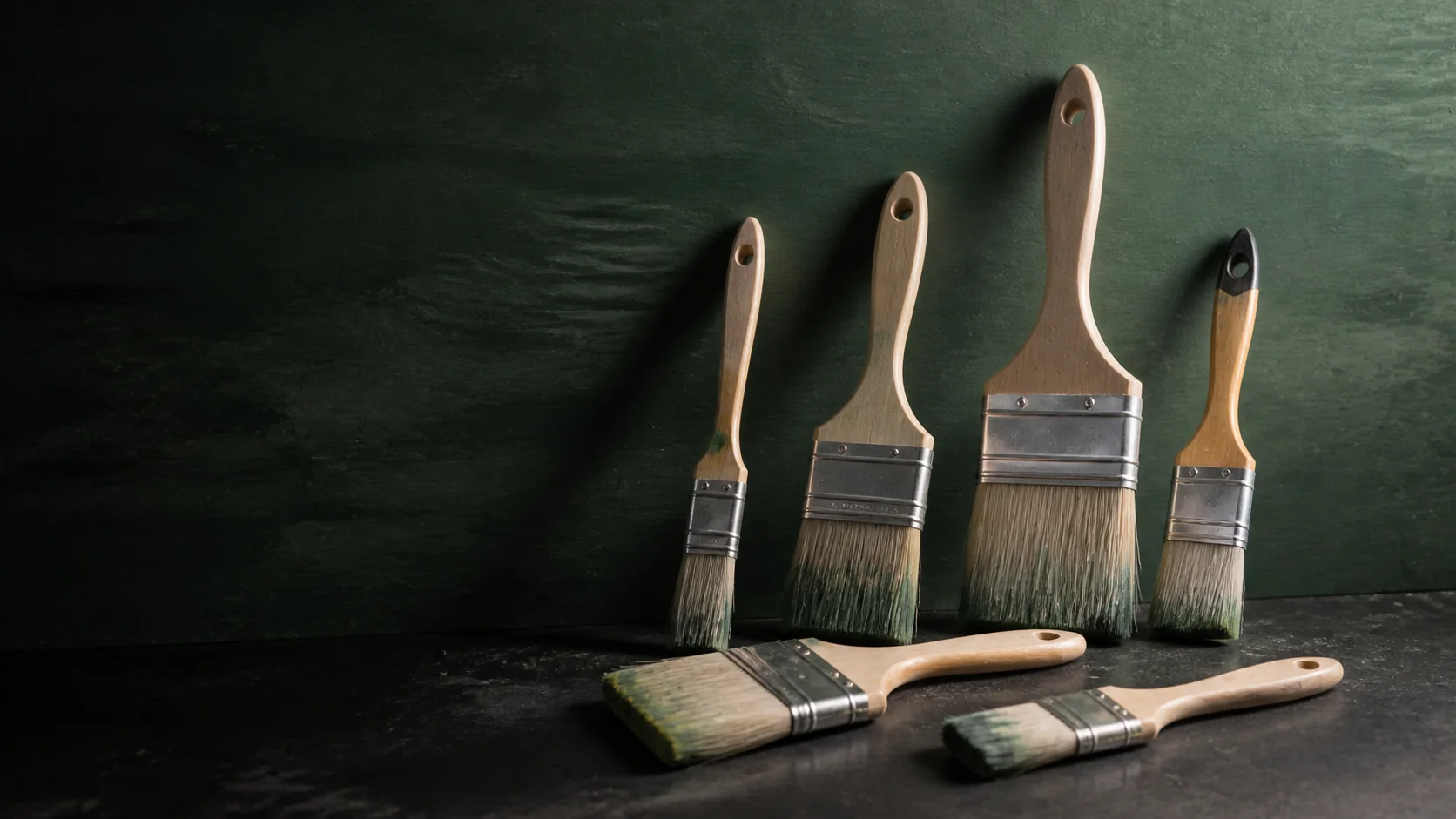
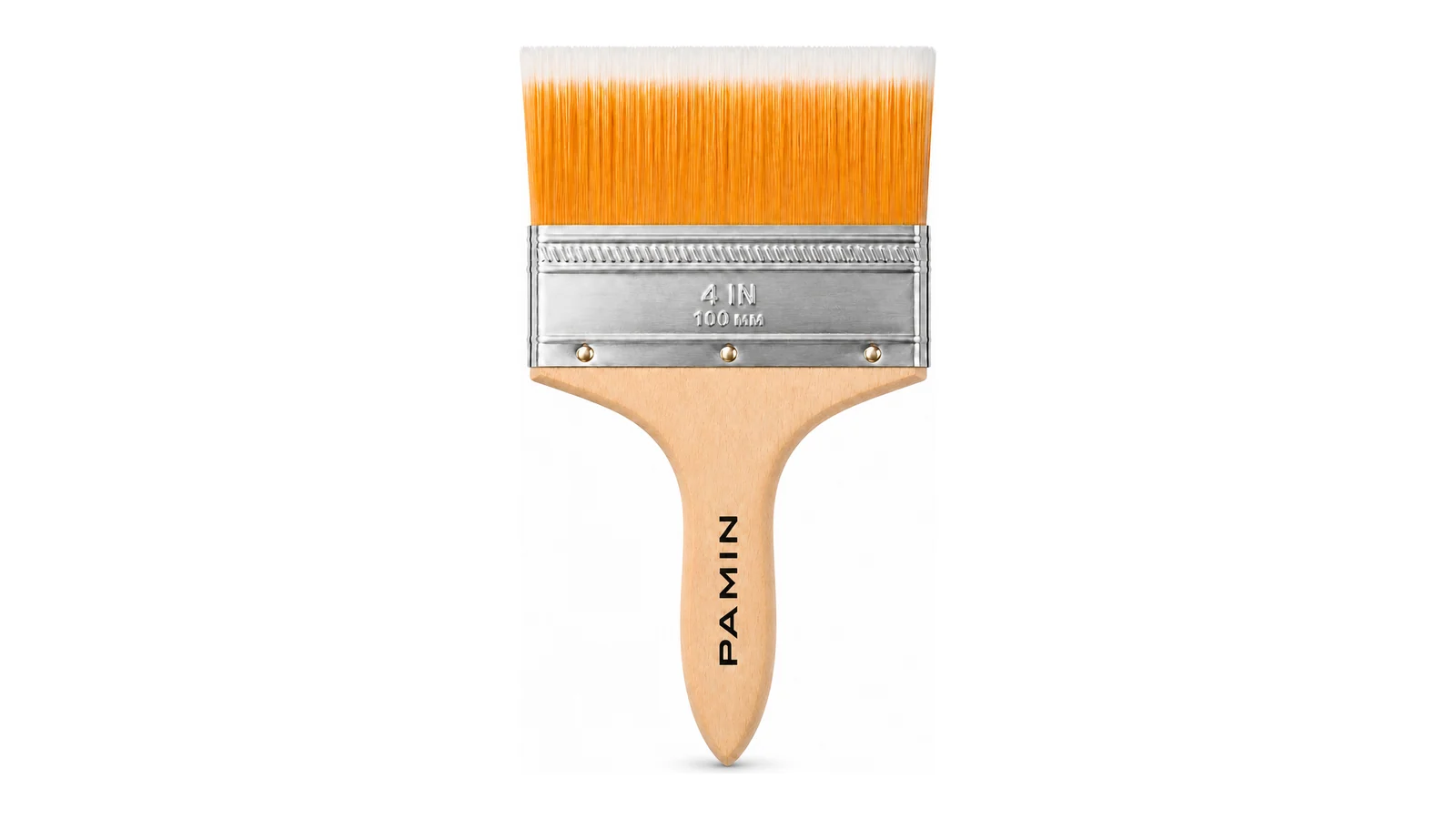
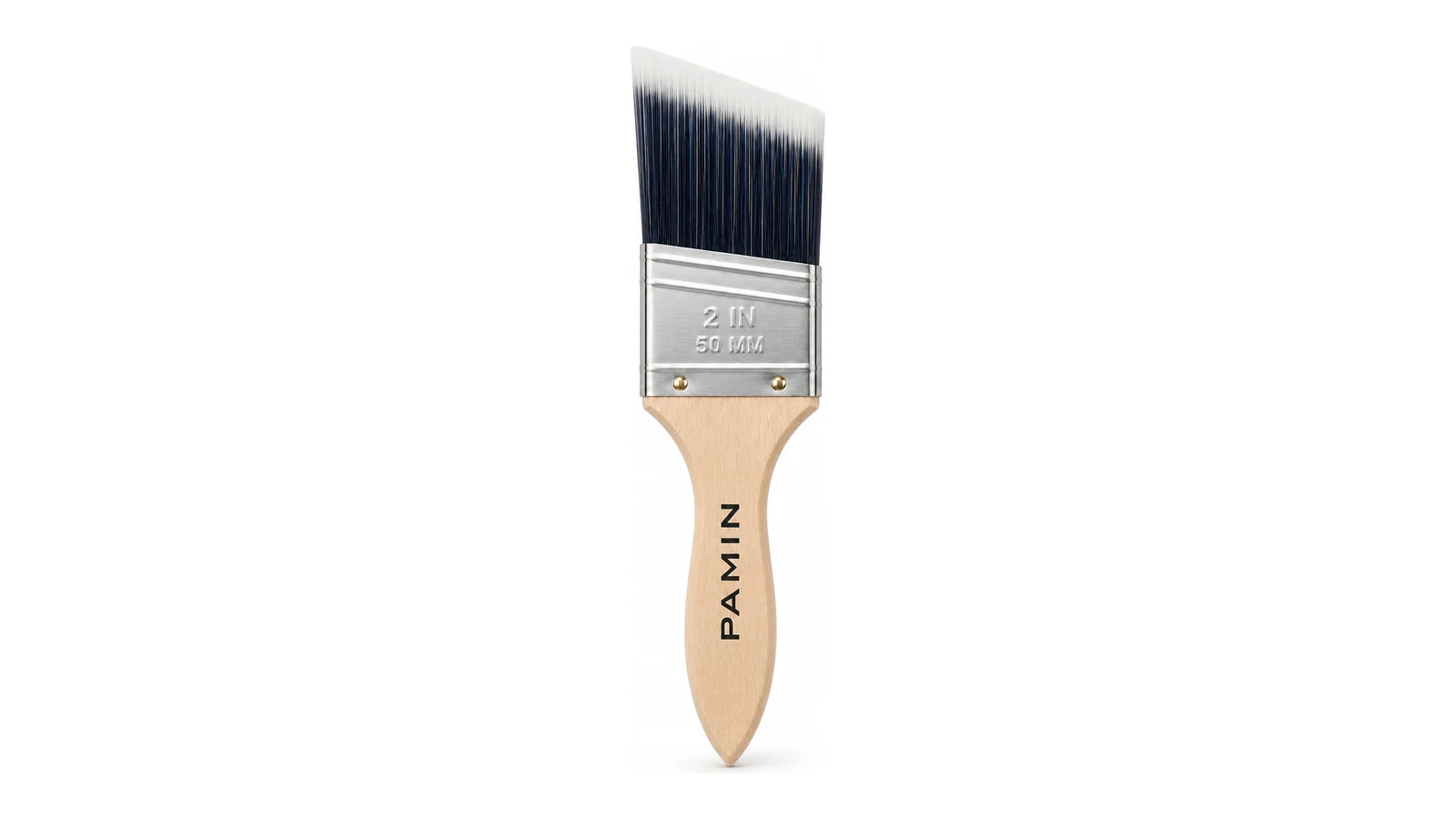
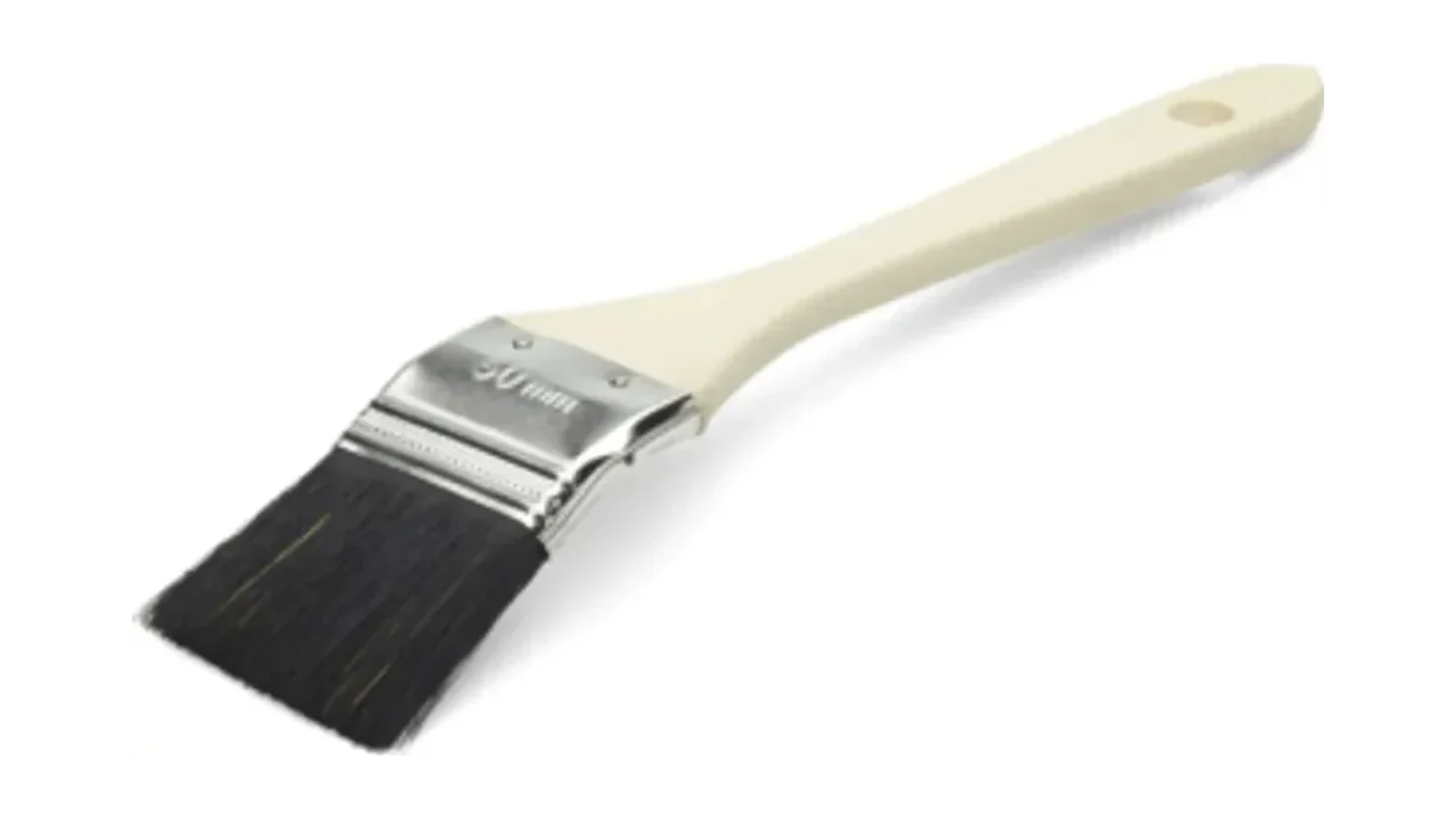
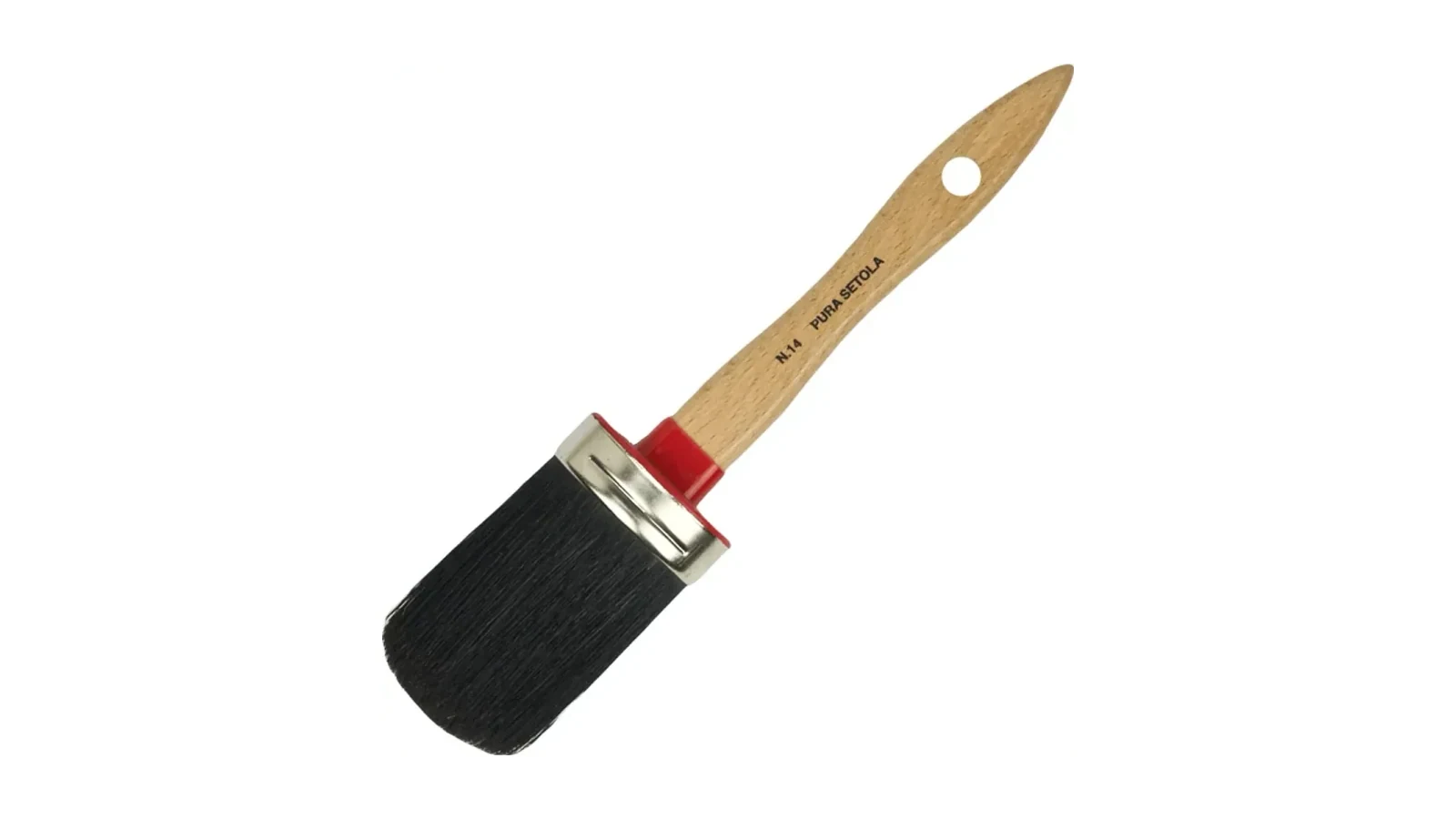
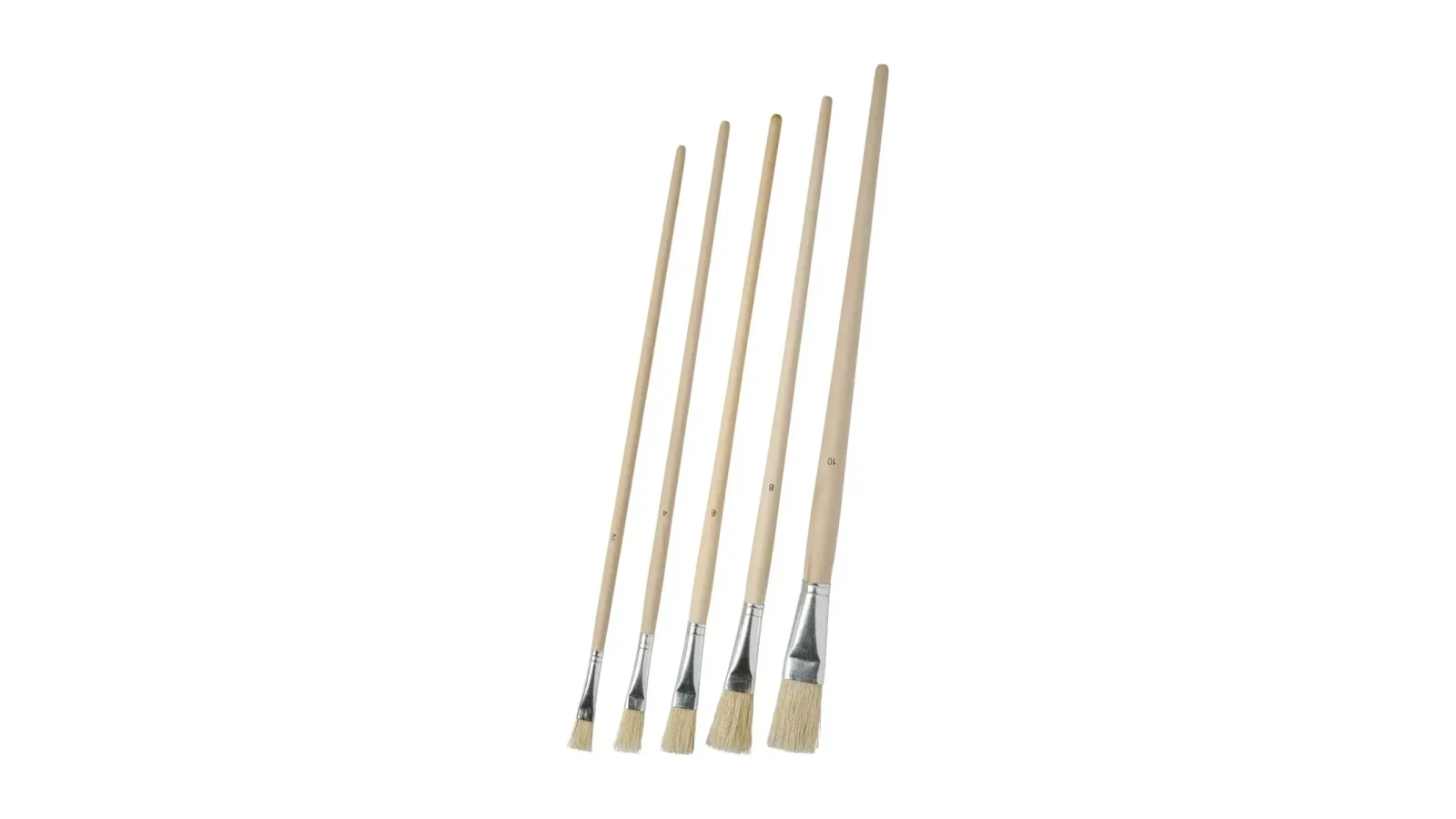
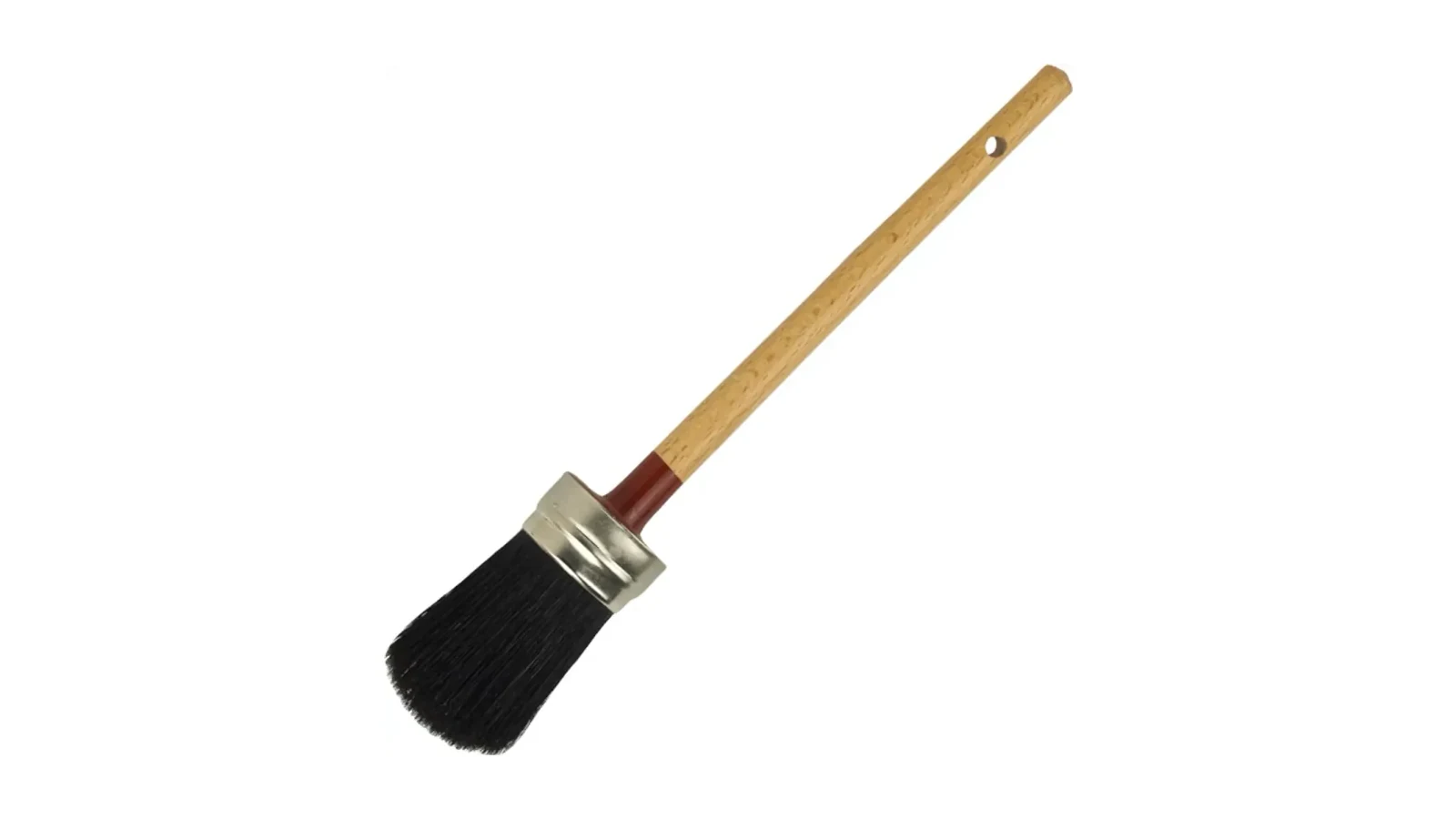
Natural bristle, synthetic filament and blended paint brushes
Choose the fill against the coating first, then compare flexibility, tip treatment and release. Published guidance recommends synthetic brushes for latex and acrylic paints and water-based wood finishes, and natural bristle for oil-based paints, varnishes, shellac, alkyd enamels, oil stains and oil-based polyurethanes. Neither choice replaces a sample test with the intended paint.
Tapered filament and flagged tips are different specification choices. Identify the proposed tip treatment explicitly and inspect the approved sample rather than using a colour description as a substitute for a material record.
Stiffness decides lines, softness decides finish
Filament stiffness is the second decision after the coating, and it is a direct trade-off: the property that produces a crisp edge works against a mark-free finish.
Rough, textured surfaces such as stucco or brickwork need a stiffer, more durable brush; published guidance is to use synthetic filament for these surfaces even with oil-based coatings, because natural bristle tips break down.
Coating and material selection: Wooster paintbrush guide. Filament stiffness and application guidance: Purdy brush filaments and Purdy brush selection. Brand-specific descriptions are not category-wide performance guarantees. Pamin material combinations remain subject to the agreed specification.
Flat, angle and long-reach brush formats by application
Handle shape, ferrule fit and fastening should be checked together. Record shoulder fit, grip, ferrule material and attachment method in the sample brief; a wider brush head does not automatically require a thicker grip. See the brush types and uses guide for the broader category comparison.